Helping you move better, recover faster and get back to doing what you love
Shockwave therapy is a non-invasive treatment used to help manage persistent tendon and soft tissue problems, reduce pain and support your body’s natural healing processes.
It is commonly used for conditions that have not fully responded to rest, exercise or other conservative treatments.
At our clinic, shockwave therapy may be recommended as part of a personalised treatment plan with osteopathy to help improve your movement, reduce discomfort and support your recovery. Or a stand alone treatment if you’re struggling with just one area that lends itself to shockwave treatment alone.
What is shockwave therapy?
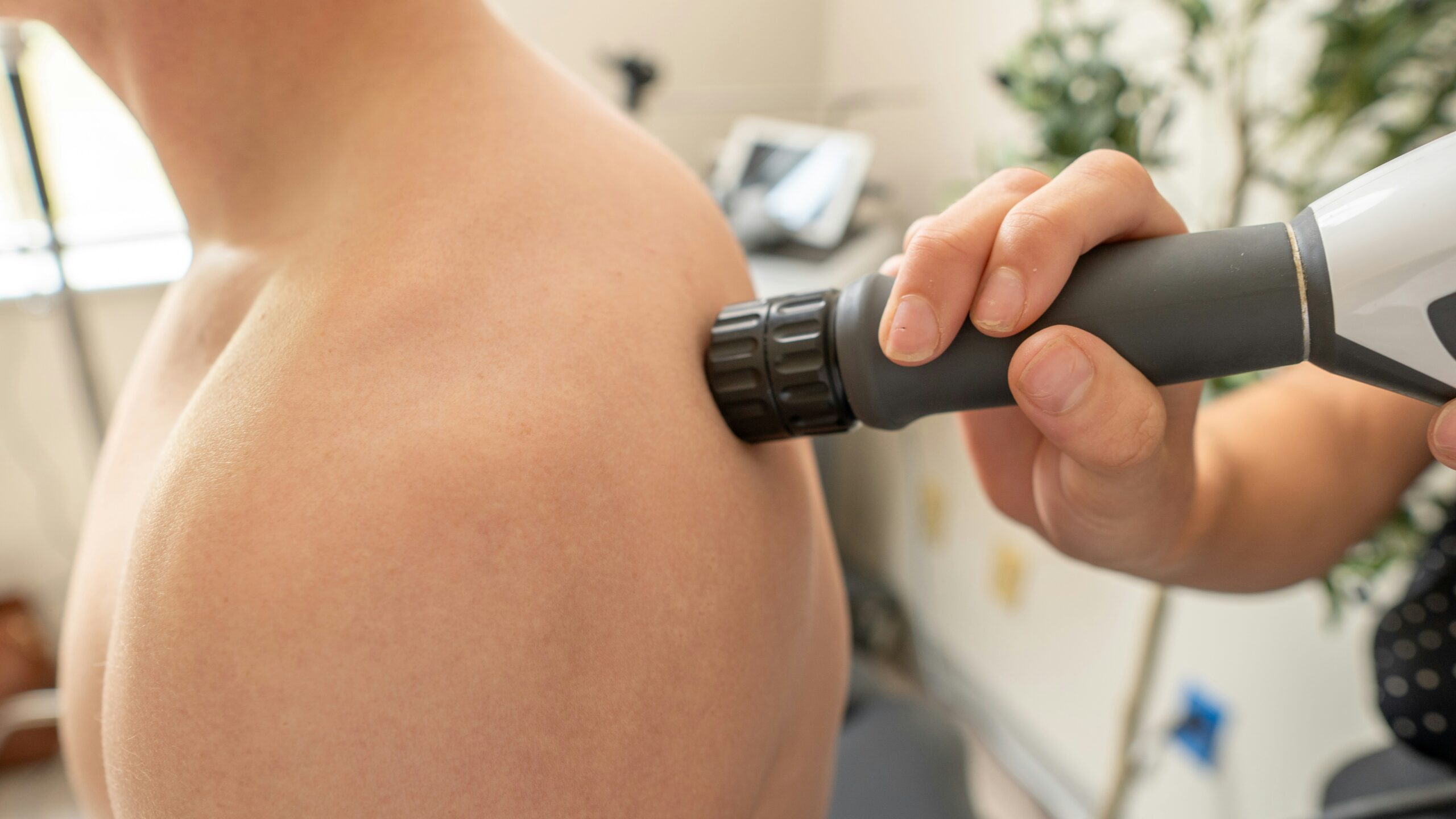
Shockwave therapy, also known as Extracorporeal Shockwave Therapy (ESWT), uses acoustic pressure waves delivered through a handheld treatment device to a specific area of the body.
These waves stimulate the tissues in the targeted area and may help encourage the body’s natural repair processes, influence pain sensitivity and improve function over time.
The treatment does not involve surgery or injections, and sessions are usually relatively short. Depending on the area being treated, you may experience some discomfort during the procedure, but the intensity can be adjusted to suit your needs.
Shockwave therapy is often used alongside a rehabilitation programme, including appropriate exercises and advice, to help achieve the best possible outcome.
What can shockwave therapy help with?
Shockwave therapy is commonly used to treat a range of persistent tendon and soft tissue conditions, including:
-
task_alt
Plantar fasciitis and heel pain
Discomfort under the heel or along the sole of the foot. -
task_alt
Achilles tendinopathy
Pain and stiffness in the Achilles tendon at the back of the ankle. -
task_alt
Tennis elbow
Pain around the outside of the elbow, often associated with gripping or lifting. -
task_alt
Golfer’s elbow
Pain around the inside of the elbow. -
task_alt
Patellar tendinopathy
Pain in the tendon just below the kneecap, often associated with jumping or running. -
task_alt
Shoulder tendinopathy and some cases of calcific shoulder tendinopathy
Persistent shoulder pain affecting movement and everyday activities. -
task_alt
Greater trochanteric pain syndrome
Pain around the outside of the hip, particularly when walking or lying on that side.
Shockwave therapy is not suitable for every condition or every person. During your assessment, we will discuss whether it is an appropriate option for your symptoms and individual needs.
What are the benefits of shockwave therapy?
For suitable conditions, shockwave therapy may offer several benefits:
-
task_alt
Greater trochanteric pain syndrome
Pain around the outside of the hip, particularly when walking or lying on that side. -
task_alt
Short treatment sessions
Appointments typically take around 5–15 minutes, depending on the area treated. -
task_alt
Supports rehabilitation
It can be combined with exercise therapy and other treatments to help improve strength, mobility and function. -
task_alt
May help persistent pain
It can be particularly useful for certain long-standing tendon problems. -
task_alt
Minimal downtime
Most people can return to normal daily activities shortly afterwards, although temporary adjustments to exercise or strenuous activity may be recommended.
Results vary from person to person, and improvement is not always immediate. Shockwave therapy is not a guaranteed cure, but it can be a useful option for selected conditions.
What happens during a shockwave therapy session?
-
Initial assessment
We will discuss your symptoms, medical history and goals, and assess the affected area to determine whether shockwave therapy is suitable for you. -
Treatment
A gel is applied to the skin, and the treatment applicator is placed over the targeted area. Acoustic waves are delivered through the applicator. You may feel tapping or pulsing sensations, and the treatment may be briefly uncomfortable. -
Aftercare and rehabilitation
We will provide advice on what to expect after treatment and whether you should temporarily modify certain activities. Where appropriate, we will also recommend exercises or other rehabilitation strategies to support your recovery. -
Follow-up
A course of treatment is often recommended rather than a single session. Many treatment plans involve three to six sessions, usually spaced about a week apart, although the exact number and frequency will depend on your condition and response.
Is shockwave therapy painful?
You may experience some discomfort during treatment, particularly if the affected area is already sensitive. The intensity can usually be adjusted to help keep the treatment tolerable.
Afterwards, it is possible to experience temporary soreness, redness, swelling or bruising. These effects generally settle within a short period.
We will explain what to expect and discuss any concerns with you before treatment begins.
Is shockwave therapy right for me?
Shockwave therapy may be worth considering if you have a persistent tendon or soft tissue problem that has not improved as expected with initial treatment.
However, it is not suitable for everyone. We will review your medical history and assess the affected area before recommending treatment. Certain medical conditions, medications, pregnancy-related considerations and treatment areas may require additional precautions or mean that shockwave therapy is not appropriate.
Our priority is to identify the most suitable approach for your condition, whether that includes shockwave therapy, exercise-based rehabilitation or an alternative treatment.
Book an appointment
If persistent pain is affecting your daily activities, exercise or ability to enjoy life, we can help you explore your treatment options.
Contact our clinic to arrange an assessment and find out whether shockwave therapy could be a suitable part of your recovery plan. Either for shockwave alone, or as part of an osteopathy assessment also.
Take the next step towards moving with greater comfort and confidence.